
How Much Does a Slit Lamp Cost? Pricing Guide for Eye Clinics
Whether you are opening a new optometry practice, upgrading an aging exam lane, or equipping a hospital ophthalmology department, the question of slit lamp cost is one of the first that comes up in the procurement conversation. A quick look at major distributors reveals price tags ranging from under $3,000 to well above $20,000 — a wide spread that can feel opaque without context.
This guide breaks down what drives the slit lamp price across entry-level, mid-range, and premium segments, so you can map your budget to your clinical workflow instead of overpaying for features you will not use.
1. Slit Lamp Price Ranges at a Glance
Before diving into feature trade-offs, here is a realistic view of the market. Prices below reflect typical MSRP across mainstream ophthalmic instrument brands (Zeiss, Topcon, Haag-Streit, Reichert, Nidek, and others) and exclude bundled imaging software or shipping.
| Tier | Typical Price Range | What You Get |
|---|---|---|
| Entry-Level | $3,000 – $5,000 | 5-step or 3-step magnification, halogen illumination, manual adjustment, basic chinrest |
| Mid-Range | $5,000 – $10,000 | Continuous zoom, LED illumination, finer slit controls, optional beam splitter mount |
| Premium | $10,000 – $20,000+ | High-end optics (Zeiss type), integrated imaging, motorized stages, DICOM connectivity |
| Portable / Handheld | $1,500 – $4,000 | Compact form factor, rechargeable LED, battery operation, ideal for field use |
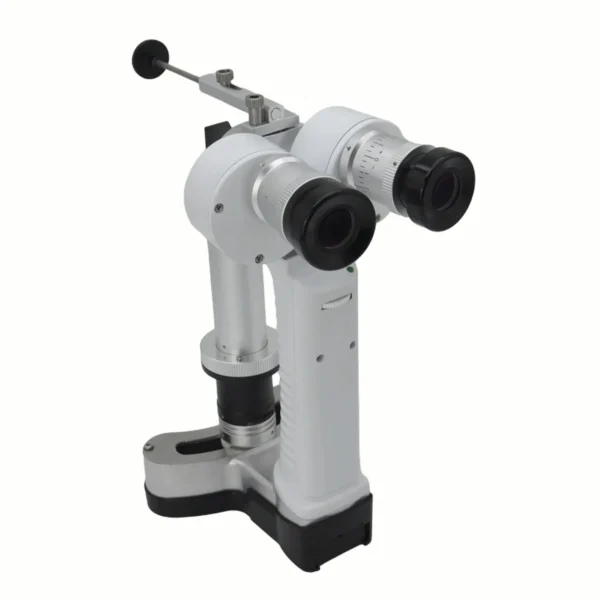
The jump between tiers is not linear — the largest price acceleration happens when you move from mid-range optics into imaging-ready premium systems.
2. What Determines a Slit Lamp’s Cost?
Five factors do most of the heavy lifting on the final invoice. The table below ranks them by relative price impact.
| Price Driver | Impact | What It Changes in Practice |
|---|---|---|
| Optical Quality | Very High | Ground glass vs. high-index precision lenses; resolves finer endothelial detail, reduces chromatic aberration |
| Magnification System | High | 3-step/5-step turret (economical) vs. continuous zoom (smoothens workflow) |
| Brand & Service Network | High | Tier-1 brands (Zeiss, Haag-Streit) command 30–60% premium for tighter tolerances + global service |
| Illumination Source | Medium | Halogen (legacy, cooler budget) vs. LED (longer life, better color rendering, higher upfront) |
| Portability & Form Factor | Medium | Table-mounted (dedicated exam lane) vs. portable slit lamp options (battery-powered mobility for pediatrics, bedside, mission work) |
Understanding which of these matter for your daily caseload is the key to not overbuying.
3. Entry-Level vs Mid-Range vs Premium: Which Fits Your Practice?
Matching the instrument to the practice prevents the two most common procurement mistakes: underbuying for a busy clinic and overbuying for a part-time setup.
- Entry-Level ($3K–$5K) fits: startup optometry clinics, second exam lanes, school vision programs, practices where the slit lamp is used primarily for routine anterior segment checks. If you see 8–15 patients per day on the instrument and do not need imaging, this tier is usually enough.
- Mid-Range ($5K–$10K) fits: established practices, multi-doctor clinics, ophthalmology referrals, and teams planning to add imaging upgrades later. The continuous zoom and better illumination pay for themselves in patient throughput within 12–18 months.
- Premium ($10K–$20K+) fits: hospital ophthalmology departments, teaching institutions, cornea and glaucoma sub-specialties, and any practice where imaging integration (anterior segment OCT, photography, angiography) is a daily workflow requirement.
If portability is the deciding factor — for example, nursing home visits, school screenings, or field clinics — explore portable slit lamp models instead of forcing a table-mounted unit into a workflow it was not designed for.
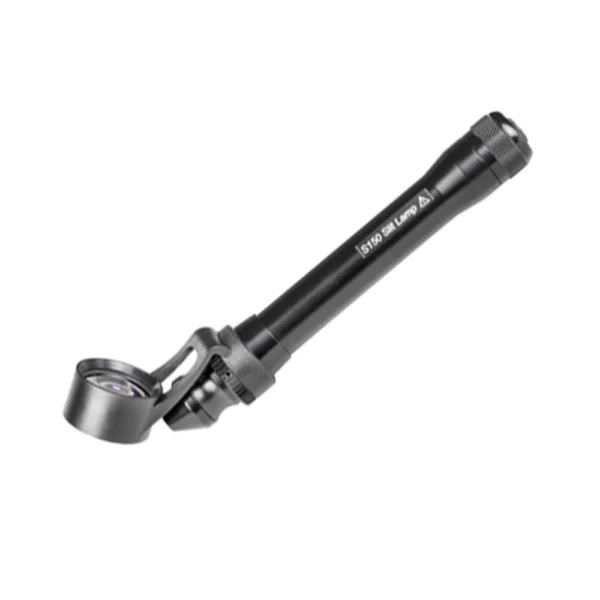
Practice Type → Recommended Tier Matrix
| Practice Type | Daily Patient Volume | Recommended Tier | Rationale |
|---|---|---|---|
| Startup Optometry Clinic | 8–15/day | Entry-Level | Routine anterior segment checks; imaging not yet needed |
| Established Multi-Doctor Practice | 15–30/day | Mid-Range | Continuous zoom + LED pay back via throughput in 12–18 months |
| Hospital Ophthalmology Dept | 30+/day | Premium | Imaging integration (OCT, angiography) is daily workflow requirement |
| Field Clinic / Mobile Practice | Variable | Portable | Battery operation; pediatrics, bedside, mission work |
| Teaching Institution | 20+/day | Premium | Sub-specialty training (cornea, glaucoma) requires finest optics |
4. Hidden Costs Beyond the Sticker Price
The number on the quotation is rarely the total cost of ownership. Budget for these recurring or easily-overlooked items:
- Routine Maintenance — Annual alignment, optics cleaning, and illumination calibration typically run $150–$400 per visit depending on the service provider.
- Staff Training — Premium systems with imaging workflows often require 2–4 hours of training per technician; some manufacturers charge for on-site sessions.
- Consumables — Halogen bulbs ($40–$120 each), foam chinrest covers, and fixation targets are small but recurring expenses over a 7–10 year lifespan.
- Software Updates — Imaging-capable systems may require annual licensing for DICOM, EHR integration, or advanced capture modules.
- Warranty Extensions — Standard coverage is 1–2 years; extended warranties add 5–12% of the purchase price per additional year.
A realistic total cost of ownership estimate: add 15–25% to the sticker price over a typical 8-year service life.
5. Frequently Asked Questions
Does insurance cover slit lamp cost? In most regions, slit lamps qualify as capital medical equipment. Commercial health insurers typically reimburse per-patient examination fees rather than equipment costs, while government health programs may offer capital purchase grants for accredited facilities. Tax depreciation schedules often allow 5–7 year straight-line depreciation for ophthalmic instruments.
Should I buy a used slit lamp to save cost? Refurbished slit lamps from authorized distributors can offer 30–50% savings over new, but verify optical alignment, illumination consistency, and warranty terms before purchasing. Gray-market units without service history are a higher-risk investment.
How much does a portable slit lamp cost? Portable slit lamps typically range from $1,500 to $4,000 depending on magnification, illumination source (LED versus halogen), and battery life. To learn more about portable slit lamp options, evaluate your field-use frequency before committing.
What is the typical lifespan of a slit lamp? A well-maintained slit lamp from a reputable manufacturer lasts 10–15 years in routine clinical use. Optics rarely fail; most replacements are driven by illumination component obsolescence or frame wear from daily patient flow.
When does a slit lamp deliver ROI? For a mid-volume practice (15–25 slit-lamp exams per day), a mid-range instrument typically delivers payback within 18–30 months through billable examination revenue, reduced chair time per case, and improved diagnostic yield versus lower-tier optics.
Looking for the right slit lamp for your practice? Our team can help you compare options and find the best fit for your clinical workflow and budget. Contact us for a personalized recommendation.